

The Ultimate Guide to Proteinase K Activity & Concentration (u/ml)
From time to time, we have received questions about whether knowing proteinase K activity (u/ml) was important or not. The scenario is often this: You’re using an old protocol that calls for 1µl of proteinase K, but is that really the right amount? After all,...

6 Important FAQs About Bovine Serum Albumin (BSA)
Bovine Serum Albumin (BSA) is universal in the lab, having use in Western blot, cell tissue culture, PCR and more, but BSA’s versatility has led researchers to ask many common questions. Rather than chasing answers through the Internet, we have identified 6 very...

21 Spectacular Views From Your Laboratory Window
What most experimenters take for granted before they begin their experiments is infinitely more interesting than any results to which their experiments lead. - Norbert WeinerThe Institute of Neurobiology, located in Old Juan, Puerto Rico This image was sent in by...
An Interesting Case for Why Robust Protein Bands Matter to Everyone in the Lab
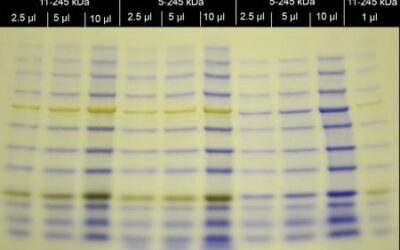
Protein ladders are used as standards in the lab to identify the approximate size of a molecule. In order to work as a standard, a protein ladder is composed of varying known sizes of whole proteins which is then compared to a sample for analysis. These ladders come...

10 Things and Beyond to Consider When Shopping or Using Luciferin/Luciferase
If you find yourself questioning the difference between various luciferase or luciferin types, this guide will set it all straight. Find out what to look out for when shopping for luciferin, why you should choose one type over another, what advantages exist between...

Becoming a Cell Minimalist – Scientists Synthesize Bare Essential Bacterial Genome
In the Search for the Essentials of a Minimal Life-form - Learn about the obstacles Venter, Smith and Hutchison faced when they set out to examine what those essential components of life are. There has always been a small portion of humanity that sought to divest of...

20 Answers to Important Proteinase K Questions – Plus Free Printable Fact Sheet
A lot of questions pop up when it comes to using proteinase K, such as how to inactivate proteinase K, how should proteinase K be stored, what is the solubility of proteinase K… The list goes on. We decided to compile the most important questions and turn this page...

10 Steps to a more Effective Scientific Presentation
If you find yourself stressed or nervous about an upcoming research presentation, you are not alone. Here I’ll discuss 10 simple ways for life science undergraduate and graduate students to improve their public speaking skills. Tips for a more seasoned researcher can...

Top 5 Electronic Lab Notebooks for Academic and Personal Use
If you’ve decided to try out the electronic lab notebook and don’t know where to start, this article is for you. Here is a review of the popular ELN platforms available detailing the cost, pros and cons of each. Electronic lab notebooks are on the rise both in...

Demystifying Material Grades for Your Laboratory
Whether it’s in a chemical’s title or its description, there is usually a note about a reagent’s grade. If you only use molecular biology grade, will using HPLC grade be a problem? What do these reagent grades even mean? How much do these grades really matter? These...

10 Tips for Writing, Editing and Submitting a Successful Grant Proposal
After finding potential sources of funding for your life science research, it’s time to get started on writing your grant proposal. If this is your first attempt or you are a novice grant writer, follow these tips to prepare a successful application and increase your...
15 Steps Lab Managers Need to Create and Maintain a Budget
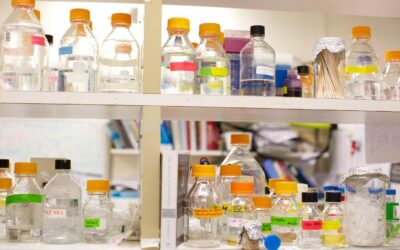
arning to create and maintain a laboratory budget can be difficult for a new lab manager. Here are some tips to help you stretch your budget to its limits while maintaining the productivity of your lab. Maintaining your lab’s budget is fundamental to having a...

10 Questions to Ask Yourself When Deciding if a Postdoc is Right for You
When you’re nearing the end of your Ph.D. program, it is easy to assume working as a postdoc is the next step towards your career goals, but there are other options. Here are 10 questions to ask yourself if you’re unsure if a postdoc position is right for you....

Starting your First Evernote Electronic Lab Notebook in 10 Easy Steps (With Videos)
If you’re ready to transition from a paper-based lab notebook to an electronic lab notebook, here are 10 steps to help you get started with the Evernote platform.This video highlights the advantages of using an electronic lab notebook such as Evernote.1. Getting...

10 Alternatives to Completing a Postdoctoral Fellowship and Entering Academia after Graduation
If you find yourself asking the question, “is a postdoc really my only option after receiving my Ph.D.,” this article is for you. Here are 10 great alternative career paths to consider when a postdoc isn’t your ideal route. When starting the path to a Ph.D. in the...

Public Speaking Dos and Don’ts—A Life Scientist’s How-To Guide
It can often be difficult for even an experienced life science researcher to keep an audience focused and awake. To address this issue, we have crowdsourced and compiled strategies to avoid losing your audience during your next talk or lecture.In this article, we have...
The 10 Cs to Publishing Quality Scientific Charts and Graphics
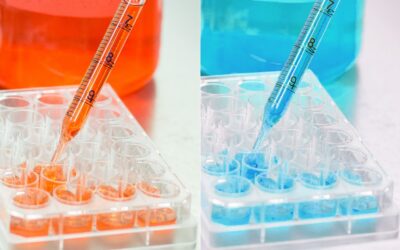
The pictures, graphics, and charts that you put into your scientific publication can make or break its success. Often, before reading a paper, people will look through the abstract to get an idea of whether reading will be worth their time. Next, following the SQ3R...

The Pros and Cons of Using an Electronic Lab Notebook (ELN)
Whether you’re a first year grad student or a seasoned life scientist, you’ve probably been part of the great debate of written versus electronic lab notebooks at one point or another. Here I’ll give you an overview of the pros and cons of the digital notebook to help...

How to Write Scientific Protocols for All Audiences
Writing a reproducible protocol is an essential skill that all scientists must have. Here are some tips for writing successful protocols that readers of various education levels or backgrounds can follow. When it comes to protocol writing, one size does not fit all....
10 Things to Consider when Deciding if You Should Buy New or Used Lab Equipment
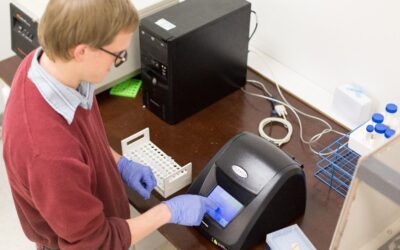
inding the perfect piece of lab equipment to buy can be quite the task. These 10 tips will help you make the decision between purchasing new or used and help you know what to look for with each option. Buying lab equipment is a lot like buying a car—there are many...

A Guide for Choosing Between Commonly Used Antibiotics
When it comes to choosing between common research antibiotics, there are a few guidelines that can help you make a decision. The most important deciding factor depends on what you are selecting for and what antibiotics will be effective on all cells excluding the...

Up Your Lab Manager Game in 10 Easy Steps
Once you’ve settled into your lab manager job, you may find yourself wondering how you can improve and make things run more smoothly for the researchers you are working with. Here we’ve compiled 10 ways you can up your lab manager game, some of which you can even...

Convincing Your PI to Try Your Idea
When working in the life sciences, what we know is always changing. New discoveries are made, new technologies are invented, and we have to adapt. Sometimes, it can be hard to find the right way to suggest a change in the lab you’re working in, and when you do make a...

How to Prepare Your Most Frequently Used Buffers
Many biological experiments require the use of buffers to maintain an effective pH, which is important since proteins and enzymes are sensitive to changes in pH, and choosing the right buffer for current and downstream experiments is critical. In this article, I will...